

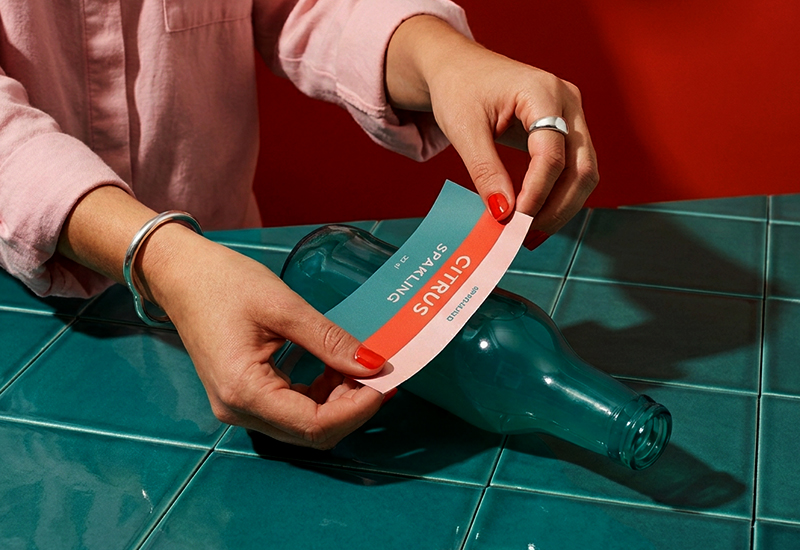
If you’ve searched “label size,” chances are you landed here from a few different directions — maybe you’re labeling a batch of candles, sizing up a shipment of jars, or just trying to figure out what fits on a bottle without looking cramped. This guide focuses specifically on product and packaging labels: the kind applied to bottles, jars, boxes and containers to identify what’s inside. (If you’re after shipping labels for carriers or sewn garment labels, those follow different standards entirely — this isn’t the guide for that.)
The right label size depends on your container, how much information needs to fit, and where the label will actually be seen. Here’s how to get it right.
Standard Label Sizes by Product Category
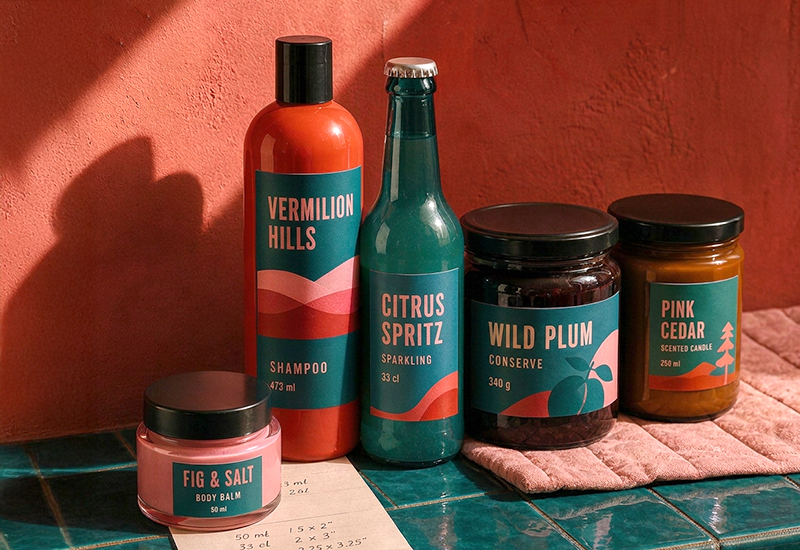
Different product categories tend to converge on similar sizes, mostly because they’re shaped by the containers themselves.
| Product type | Typical label size |
|---|---|
| Small cosmetic containers (lip balm, small jars) | 1.5″ x 2″ |
| Medium bottles (lotion, shampoo) | 3″ x 4″ |
| Beverage bottles | 3″ x 4″ to 4″ x 5″ |
| Jars (jam, candles, spreads) | 2″ x 3″ |
| Food packaging and boxes | 3″ x 3″ or larger, depending on the box face |
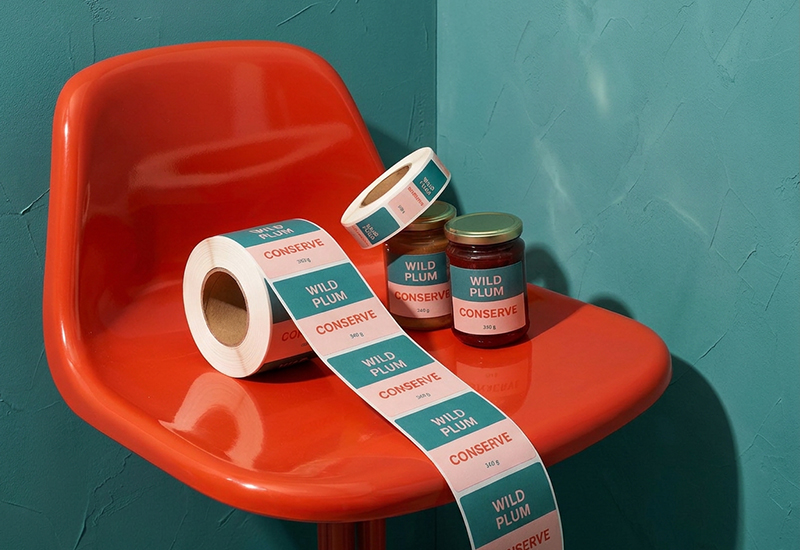
These are common starting points, not fixed rules — the right size for your project still depends on your container’s actual dimensions and how much you need to say on the label. All of the ranges above fall within what’s configurable when you order custom roll labels, so you’re not choosing between theory and what you can actually print.
Flat vs. Curved Surfaces: Why It Matters
A label’s ideal size isn’t just about the product category — it’s also about the shape of the surface it’s going on.
Flat surfaces (boxes, flat-sided containers) are the most forgiving. There’s no wraparound to account for, so you have more flexibility in both size and layout.
Curved surfaces (bottles, jars, tubes) are more constrained. A label that’s too wide for the container will wrap too far around, distorting the design and making it harder to read in one glance. As a general rule, it’s safer to size a label for a curved container a little narrower than you might expect, and check it against the actual container before finalizing.
Margins, Bleed and Safe Zones
Even the right overall size can fall short if the internal spacing isn’t handled correctly.
- Leave a small margin from the edge — around 0.125″ is a safe standard — so text and barcodes aren’t at risk of being cut off during production.
- Add bleed if your design has a background color or image that runs to the edge, so there’s no thin white line around the finished label.
- Keep critical information (barcodes, allergen warnings, batch numbers) well inside the safe zone, not close to the edge where trimming tolerances matter most.
Choosing the Right Size for Your Project
Once you know the general range for your container, a few questions narrow it down further.
How much information does the label legally or practically need to carry? Food and cosmetic labels often have to include ingredients, allergens or usage instructions — factor that space in before locking in a size, not after.
Will the label be read up close or from a shelf? A label picked up and read in hand can carry smaller text and more detail. A label meant to be recognized from a few feet away on a shelf needs a bolder, simpler design — even if the physical size stays modest.
Does the size still leave room for your brand to stand out? It’s easy to let required information take over the entire label. Where possible, keep enough visual space for branding, not just compliance text.
Common Mistakes When Sizing a Label
- Undersizing for the amount of required text. Ingredients, instructions and legal information need real space — a label that’s too small forces tiny, hard-to-read type.
- Not accounting for the container’s curve. A size that looks right on a flat mockup can wrap awkwardly on an actual bottle or jar.
- Placing critical text too close to the edge. Small shifts in trimming or application can cut into text that isn’t safely inside the margin.
- Choosing size before container. Finalizing a label size without measuring the actual product often leads to a mismatch that’s only caught after printing.
FAQ
What is the standard size for a product label? There isn’t one universal standard — it depends on the container and product category. Small containers typically use labels in the 1.5″ to 2″ range, while medium bottles and jars often fall between 2″ and 4″.
How do I know what size label my bottle needs? Start with your container’s flat, non-curved surface area, leave a small margin on each side, and check the result against a comparable product on the shelf before finalizing.
Can I order a custom label size? Yes — label sizes aren’t limited to a fixed set of presets. As long as it fits within the printable range, you can set an exact size to match your container.
What margin should I leave around the edge of a label? Around 0.125″ is a safe standard, giving enough buffer so text and barcodes aren’t at risk during trimming or application.
Does label size affect the price? Yes — along with quantity, material and finish, size is one of the main factors in cost, since larger labels use more material per piece.
Ready to size your own? You can configure exact dimensions, shape, material and quantity for your project with Pixartprinting’s roll labels, from a small test batch to a full production run.