


Half the fun of a great sticker is figuring out where it goes. The other half — the part people skip — is making sure it actually stays there, looks good, and doesn’t peel, crack or fade a month later.
This guide covers both: dozens of creative places to put your stickers, and how to pick the right one for wherever you’re planning to stick it.
Quick Answer
Stickers work almost anywhere — but where you put them, and how long they last, depends on the surface. Smooth, hard, non-porous surfaces (laptops, water bottles, car exteriors, plastic cases) hold vinyl stickers well. Soft, porous or frequently washed surfaces (fabric, cardboard, unfinished wood) are much less reliable. The categories below cover the most popular spots, plus what to know before you commit.
Tech & Everyday Carry
Your devices are probably the first place you think of — and for good reason, they’re smooth, flat-ish, and you look at them all day.
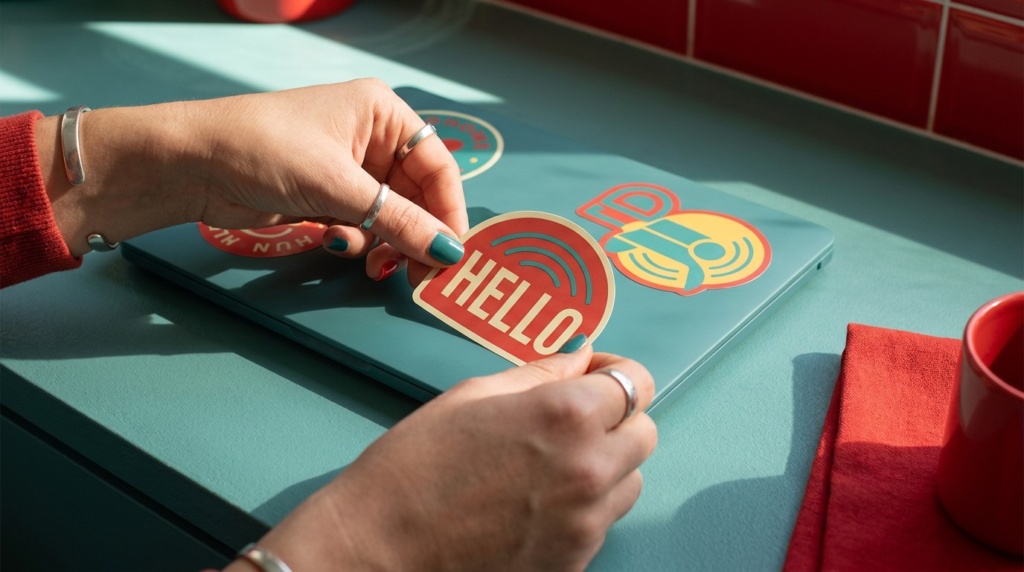
- Laptop lid — the classic. Leave a border around the edges if you plan to add more over time.
- Phone case (not the phone itself, unless you enjoy peeling it off every time you upgrade)
- Tablet back or cover
- Headphones and earbud cases
- Game controllers
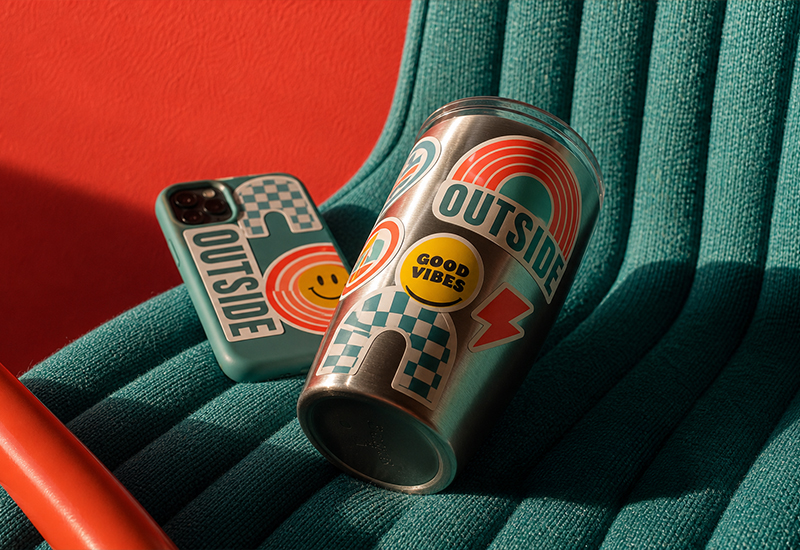
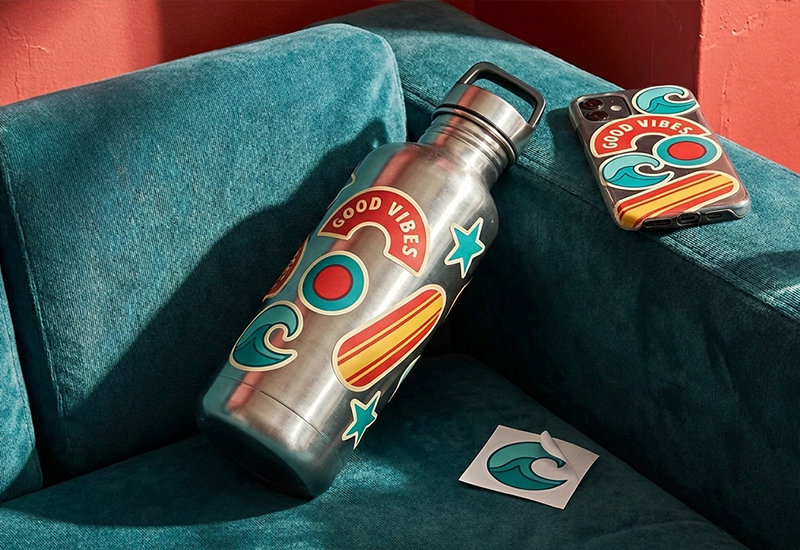
- Water bottles and tumblers — hugely popular, but this is exactly where material choice matters most (more on that below)
- Wireless keyboard
- Portable charger or power bank
On the Move
Anything you carry, ride or drive is a natural sticker surface — with a couple of caveats worth knowing before you commit.
- Car bumper or rear window — a favorite for band stickers, causes and hobbies. Worth checking your local rules if you’re on a leased vehicle, since some dealers deduct cleanup costs at return.
- Bike frame
- Skateboard deck
- Helmet — just avoid the front visor area if it could affect visibility
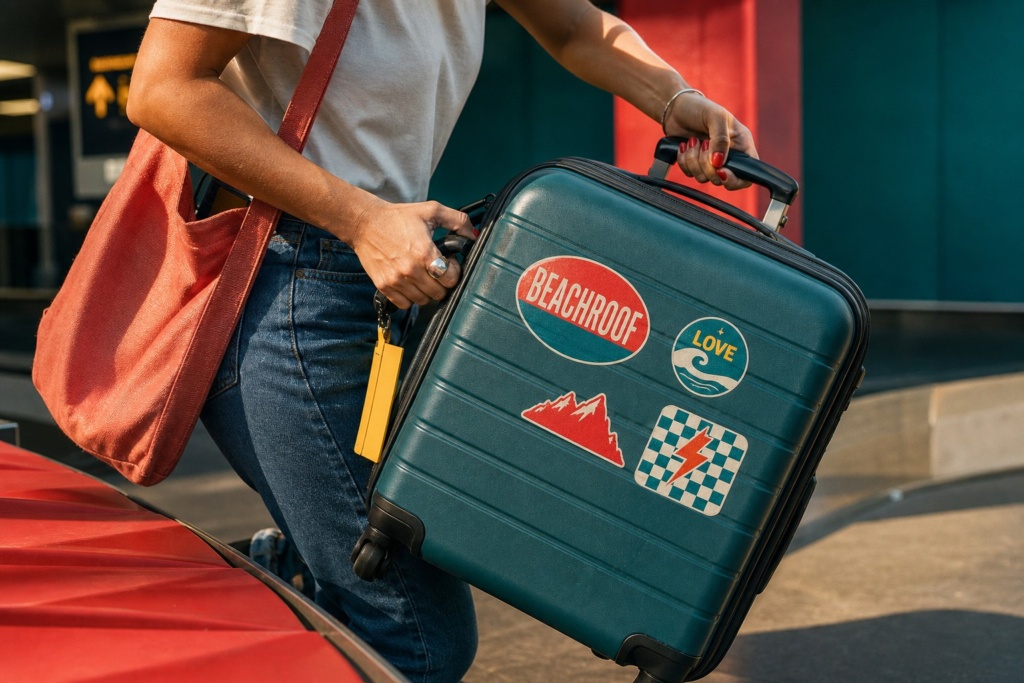
- Luggage — genuinely useful, not just decorative: a covered suitcase is much easier to spot on a carousel
- Scooter deck
Around the Home
Stickers aren’t just for things you carry — they’re an easy way to personalize spaces too.
- Notebooks and journals
- Mirrors — great for handwritten reminders or affirmations under a clear sticker
- Mailbox
- Plant pots
- Light switch covers and outlet plates
- Kitchen appliances — a small blender or coffee machine can take a lot of personality
- Storage bins and organizers — an easy way to label what’s inside at a glance
School & Work
Your workspace is personal territory, and stickers are one of the easiest ways to make it feel that way.
- Binders and folders
- Pencil case
- Desk organizer or pen cup
- Corkboard or whiteboard frame
Sports & Outdoor Gear
Gear that travels with you outdoors is a great sticker surface — as long as you plan for weather.
- Cooler
- Tent or camping gear
- Ski or snowboard
- Gym bag
For Collectors and Creatives
If you’re accumulating stickers faster than you can place them, here are a few spots built for exactly that.
- Sticker books or binders — the easiest way to keep a growing collection organized instead of losing pieces in a drawer
- Guitar or instrument case
- A dedicated wall or door — some people treat this like a scrapbook that grows over time
- Gift wrapping — an easy way to make a plain package feel personal
- Vinyl record sleeves — a subtle way to personalize a collection without touching the record itself
Gifting and Seasonal
Stickers are also an easy, low-cost way to dress up something for someone else.
- Gift boxes and bags
- Holiday cards
- Party favors
Choosing the Right Sticker for the Surface
This is the part most placement lists skip, and it’s the difference between a sticker that lasts and one you’re re-buying in three months.
Smooth, hard surfaces (laptops, phone cases, water bottles, car exteriors, hard plastic) are the easiest to work with. Vinyl holds well here because there’s a flat, non-porous surface for the adhesive to grip.
Curved surfaces are mostly fine — water bottles, helmets and bike frames all work — but very tight curves or bumpy textures can cause edges to lift over time, especially with larger stickers.
Fabric, cardboard and unfinished wood are the trickiest. These surfaces are porous, which means standard adhesive vinyl often peels or bends out of shape rather than staying flat. If you’re set on decorating something soft, look for a sticker specifically designed for fabric, or accept it may not be permanent.
Anything that gets wet or goes outdoors — water bottles, bikes, coolers, camping gear, car exteriors — needs a waterproof, UV-resistant material. Regular paper stickers will bubble, fade or lift with moisture and sun exposure. This is where die-cut custom stickers printed on weatherproof vinyl are worth the small upgrade over a basic sticker sheet.
One quick note: if what you actually need is something to identify a product you’re selling or giving away — rather than something to decorate your own belongings — you’re looking at a slightly different product. Personal decoration is a sticker; product identification is typically a roll label, designed to be applied consistently to packaging, bottles or jars.
Common Placement Mistakes
A few small things separate a sticker that lasts from one that’s peeling within a week:
- Applying to a dirty or dusty surface. Wipe it down first — dust and oils are the number one cause of early lifting.
- Applying to a damp surface. Let it dry completely; trapped moisture causes bubbling.
- Not smoothing out air bubbles. Work from the center outward with a card or your thumb, not just pressing the middle.
- Choosing the wrong material for the job. A paper sticker on a water bottle, or a small delicate design on a heavily textured surface, is set up to fail from the start.
- Sticking to something you don’t own or can’t replace. Rented equipment, borrowed gear and anything you’ll need to return in original condition are common regret spots.
FAQ
Does putting stickers on a laptop damage it? Not usually, as long as you avoid vents, the trackpad and any area near ports. Removal can occasionally leave light residue, which usually comes off with a bit of rubbing alcohol.
Can I remove a sticker without leaving residue? Often, yes — gently heating the sticker with a hairdryer softens the adhesive, making it easier to peel cleanly, and any leftover residue usually lifts with rubbing alcohol.
What’s the best material for outdoor stickers? A waterproof, UV-resistant vinyl. Standard paper stickers aren’t built to handle moisture or direct sun for long.
Do stickers ruin car paint? Generally no, if they’re applied to intact, clean paint and removed with care. Problems tend to come from cheap adhesives left on for years, not from stickers themselves.
How do I keep a big sticker collection organized? A dedicated sticker book or binder is the easiest way — it keeps everything visible and protected instead of scattered across drawers or bags.
Ready to design your own? You can create custom shapes, sizes and finishes for any surface with Pixartprinting’s custom stickers, from a single design to a full batch.