


Some acronyms belong to contemporary history—CIA, KGB, NASA, Brexit—while others appear in our daily lives: INPS, SIM, Ikea (yes, even Ikea!). These abbreviations function like standalone words, becoming so familiar that we often forget they started as acronyms.
In general, acronyms are created by combining the first letters (or key letters) of the words in a phrase or name. For example, NASA stands for National Aeronautics and Space Administration. Brexit combines Britain and exit, referring to the United Kingdom’s departure from the European Union.
But how are acronyms formed? Which ones are the most famous—or the most surprising?
Here’s a journey through the world of acronyms: from ancient examples to 20th- and 21st-century classics, plus some unexpected terms you’d never guess were acronyms. And yes… we’ll even explain Ikea.
Historical acronyms
When did acronyms first appear? There’s no definitive answer. While we can trace early examples back to the first centuries A.D., acronyms didn’t become a common way to create new words until the 20th century. In fact, the word acronym itself didn’t enter the dictionary until around 1950.
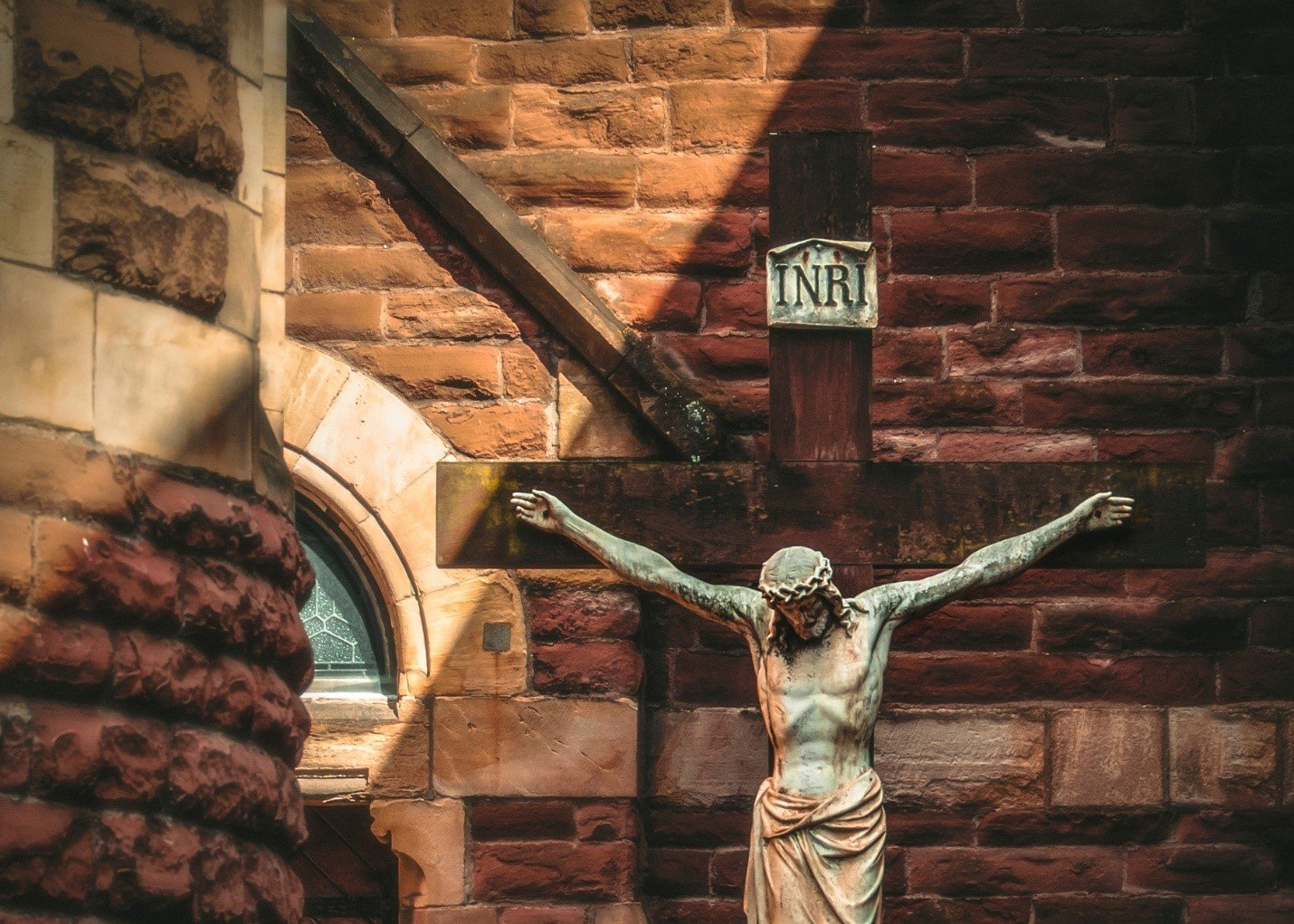
Among the oldest known acronyms are two tied to early Christianity: ΙΧΘΥΣ and INRI.
- ΙΧΘΥΣ means fish in ancient Greek and was used by early Christians as an acronym for “Jesus Christ, Son of God, Savior.” It often appeared within a fish-shaped outline—one of the earliest Christian symbols.
- INRI is the inscription placed on the cross during the crucifixion of Jesus. It represents the Latin phrase Iesus Nazarenus Rex Iudaeorum — “Jesus of Nazareth, King of the Jews.”
The ancient Romans also used many abbreviations on their coins—the most famous being S.P.Q.R. (Senatus Populusque Romanus). Technically, these are not acronyms but initialisms, since they are read letter by letter rather than as a single word (the same applies to FBI).
Jumping ahead to the 19th century, we find a fascinating example of a backronym—a phrase created to fit an existing word. In Milan and Venice, the phrase “Viva Verdi” appeared frequently on walls. What looked like a tribute to the composer Verdi was actually coded patriotism:
Viva Vittorio Emanuele Re D’Italia (“Long live Victor Emmanuel, King of Italy”).
Moving into the 20th century, we encounter two infamous acronyms:
Gulag — acronym for Glavnoe upravlenie lagerej, the Soviet system of forced labor camps.
Gestapo — Geheime Staatspolizei, the secret police of Nazi Germany.
Acronyms that don’t sound like it
Let us come to today and the acronyms that are so successful that we forget their origin as abbreviations.
Let’s start with one of the most surprising examples: Ikea.
The name is actually an acronym formed from:
- Ingvar Kamprad — the founder’s initials
- Elmtaryd — the farm where he grew up
- Agunnaryd — his hometown in Sweden
Even the famous M&M’s candies owe their name to their creators: Mars & Murrie.
Continuing with well-known brands, Yahoo! is another backronym. It stands for:
Yet Another Hierarchical Officious Oracle.
In English, “yahoo” also describes someone coarse or uncouth—a humorous twist from the founders, whose original project name was “Jerry and David’s Guide to the World Wide Web.”
TIME magazine also originates from an acronym:
The International Magazine of Events.
The Smart car brand is itself an acronym taken from Swatch Mercedes ART. The concept came from Nicolas Hayek, the creator of Swatch watches, who eventually found the ideal partner for the project in Mercedes-Benz.
Finally, some everyday words were born as acronyms but became so familiar that we stopped writing them in uppercase—such as:
quasar (quasi-star)
smog (smoke + fog)
motel (motor + hotel)
laser (light amplification by stimulated emission of radiation)
radar (radio detection and ranging)
Staying on the subject of brands, Yahoo! – one of the first search engines on the web – is also an (inverse) acronym. And exactly it stands for Yet Another Hierarchical Officious Oracle. The full word Yahoo in English, however, has the meaning of rough, wild, ungainly. The two creators were not lacking in irony since the name originally chosen was “Jerry and David’s Guide to the World Wide Web”-in Italian: Jerry and David’s Guide to the World Wide Web.
TIME magazine, on the other hand, takes its name from the definition The International Magazine of Events (i.e., “”The International Magazine of Events”), while the name of the smart car manufacturer is an abbreviation of Swatch Mercedes ART. In fact, the idea for the brand is from Nicolas Hayek, the creator of Swatch watches, who-after several wanderings-found in Mercedes Benz the right partner for his new product.
Finally, there are words that have now entered the everyday language, so much so that they are no longer even spelled in capital letters: such as smog (smoke + fog), motel (motor + hotel), laser (light amplification by stimulated emission of radiation), radar (radio detection and ranging) or quasar (quasi star).
Acronyms that are not.
We conclude with two words that appear to be acronyms instead, but are not. The first is SOS-you can rack your brains all you want, but it is not an abbreviation of any definition. Simply the name was invented that way because in Morse alphabet it is very easy to convey!
The first is SOS.
You can search for meanings all you want, but it doesn’t stand for any phrase. The sequence was chosen simply because it’s quick and easy to transmit in Morse code — three short, three long, three short. Its simplicity made it universally effective as a distress signal.
Another widespread misconception concerns the word spa. Many believe it comes from the Latin phrase salus per aquam (“health through water”). In reality, this explanation is an urban legend.
The term almost certainly derives from the Belgian town of Spa, known since the 15th century for its healing thermal springs.
Ready to invent the perfect acronym for your project or brand?
You can experiment with this free acronym generator.